
I’ll never forget sitting across from Maria, a client who had been struggling with her blood sugar for months despite eating what she described as “all the right foods.” As we reviewed her food diary together, the issue became crystal clear—her portions were easily double what her body could handle at one sitting. She was doing everything right in terms of what she ate, but the how much was sabotaging her efforts. That conversation changed everything for her, and it’s a scenario I’ve witnessed countless times over my decade of helping people manage diabetes through nutrition.
If you’re living with diabetes, you’ve probably heard the phrase “portion control” more times than you can count. But here’s what I’ve learned working with hundreds of clients: most people don’t really understand why portion control matters for blood sugar management, or more importantly, how to actually do it without carrying around measuring cups for the rest of their lives.
In this article, I’m going to share the practical, real-world strategies I’ve developed over years of helping people just like you master portion control. We’ll cover why portions matter so much for blood sugar stability, simple techniques for estimating serving sizes without complicated tools, and the specific portion guidelines that work best for different types of foods. By the end, you’ll have actionable strategies you can start using at your very next meal.
Why Portion Control Is Critical for Diabetes Management
Let me be straight with you—even the healthiest food on the planet can spike your blood sugar if you eat too much of it at once. I’ve seen clients whose blood sugar would soar after eating brown rice, quinoa, or sweet potatoes—foods that are often labeled as “diabetes-friendly.” The problem wasn’t the food itself; it was the quantity.
Here’s what happens in your body: when you eat carbohydrates, they break down into glucose and enter your bloodstream. Your pancreas then releases insulin to help move that glucose into your cells for energy. When you have diabetes, this system doesn’t work efficiently. Either your body doesn’t produce enough insulin (Type 1), or your cells don’t respond to insulin properly (Type 2), or both. The result? Too much glucose stays in your bloodstream.
The amount of carbohydrates you consume at one time directly impacts how high your blood sugar will rise. A small portion might cause a gentle, manageable increase. A large portion can cause a dramatic spike that your body struggles to handle. It’s like the difference between adding a cup of water to a bathtub versus dumping in five gallons at once—the drain can handle the first scenario, but the second will overflow.
But here’s something many people don’t realize: portion control isn’t just about carbohydrates. Protein and fat portions matter too. Eating excessive protein can be converted to glucose through a process called gluconeogenesis, though this happens more slowly. Large amounts of fat can slow digestion and cause delayed blood sugar spikes, and of course, excess calories from any source can contribute to weight gain, which makes insulin resistance worse.
In my experience, clients who master portion control often see the most dramatic improvements in their A1C levels—sometimes dropping a full percentage point or more within three months. It’s that powerful.
Understanding Serving Sizes vs. Portions: An Important Distinction
Before we dive into practical techniques, let’s clear up some confusion I see all the time. A “serving size” and a “portion” are not the same thing, and understanding this difference is crucial.
A serving size is a standardized amount determined by organizations like the FDA. It’s what you see on nutrition labels—one serving of cereal might be listed as 3/4 cup, for example. These are reference amounts meant to help you compare products.
A portion is how much food you actually put on your plate and eat. Your portion might be one serving, or it might be two or three servings. The disconnect happens when people don’t realize they’re eating multiple servings in one sitting.
I once worked with a gentleman named Tom who couldn’t figure out why his morning blood sugar was consistently high. He ate “one bowl” of oatmeal each morning—a healthy choice, right? When I asked him to actually measure what went into that bowl, we discovered he was eating nearly two cups of cooked oatmeal, which is about four servings. He was unknowingly consuming 80-90 grams of carbohydrates before 8 AM. Once he adjusted his portion to a more appropriate one cup (about 45 grams of carbs), his morning numbers improved dramatically.
The key takeaway? Always check the serving size on nutrition labels and compare it to what you’re actually eating. This awareness alone can be transformative.
The Hand Method: Your Built-In Portion Control Tool
Here’s my favorite technique to teach clients because it’s simple, portable, and you always have the tools with you—your hands. While not perfectly precise, this method is remarkably effective for everyday portion estimation. I’ve found that people who use this technique consistently have much better blood sugar control than those who try to be overly precise and eventually give up.
Protein Portions
Your palm (thickness and diameter, not including fingers) equals one serving of protein, which is about 3-4 ounces. For most people with diabetes, I recommend one palm-sized portion of protein per meal. Protein helps slow carbohydrate absorption and keeps you feeling satisfied longer, which prevents overeating.
Examples: a chicken breast, piece of fish, or hamburger patty that matches your palm size. For ground meats or smaller pieces, visualize compacting them into that palm-sized shape.
Carbohydrate Portions
Your cupped hand (like you’re holding water) equals one serving of starches or grains, roughly 1/2 to 3/4 cup depending on your hand size. This translates to about 15-20 grams of carbohydrates. For most of my clients, I recommend 2-3 cupped handfuls of carbs per meal, distributed between starches, fruits, and dairy.
However—and this is important—your individual carbohydrate needs vary based on your medications, activity level, body size, and blood sugar patterns. Some people do better with 2 handfuls, others can handle 3 or 4. This is where working with your healthcare team and monitoring your blood sugar becomes essential.
Non-Starchy Vegetable Portions
Make a fist—that’s one serving of non-starchy vegetables. But here’s the great news: these are so low in carbohydrates and calories that I encourage clients to eat at least two fists’ worth per meal, and preferably more. Load up on these! Vegetables like broccoli, cauliflower, peppers, leafy greens, cucumbers, and zucchini are your friends. They add volume to your meals, provide essential nutrients and fiber, and have minimal impact on blood sugar.
Fat Portions
Your thumb (from the tip to the base) equals one serving of fat, roughly one tablespoon. This includes oil, butter, nuts, seeds, salad dressing, and avocado. Fats are calorie-dense at 9 calories per gram, so portions need to be smaller. I typically recommend 1-2 thumb-sized portions of added fats per meal.
One common mistake I see is people thinking fats don’t matter for blood sugar and going overboard with nuts, nut butters, or cheese. While fats don’t directly spike blood sugar, excessive fat intake can lead to weight gain and delayed digestion, which complicates blood sugar management.
The Plate Method: Visual Portion Control Made Easy
If the hand method feels too abstract, the plate method is another excellent strategy. I love this approach because it works with any food and helps ensure balanced nutrition automatically.
Here’s how it works:
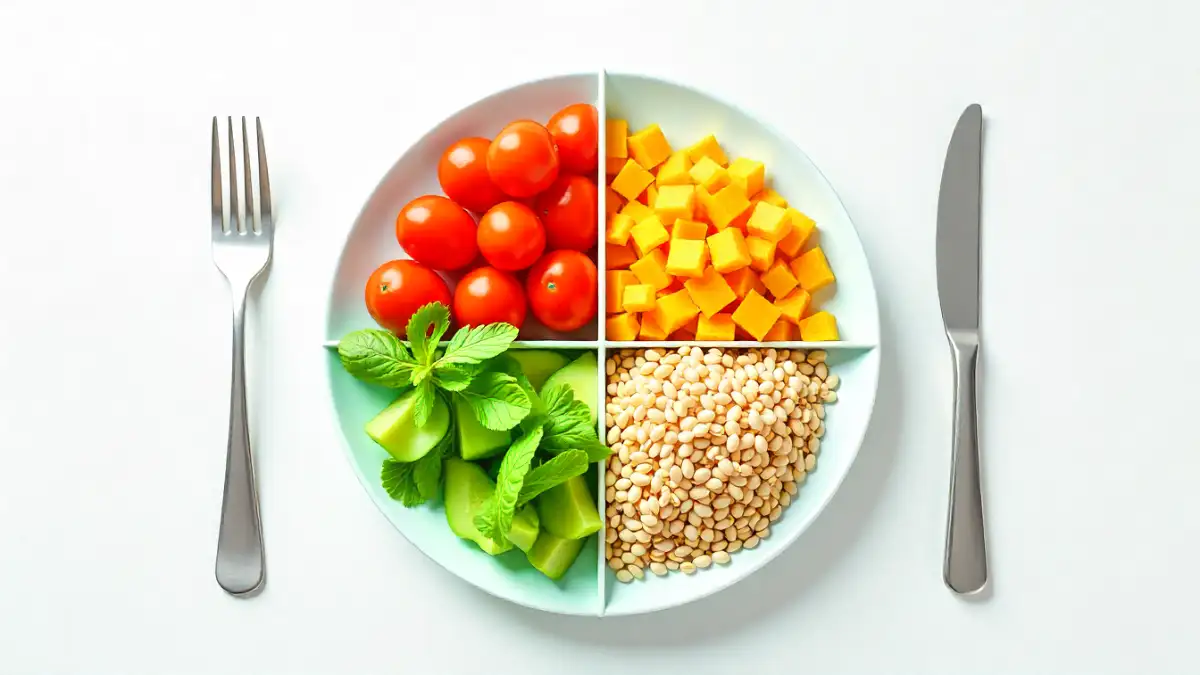
Start with a 9-inch dinner plate (not the oversized 12-inch plates many of us use). Visually divide your plate into sections:
Half your plate (50%): Non-starchy vegetables—think salads, roasted vegetables, steamed broccoli, sautéed peppers and onions, cucumber salad, coleslaw (watch the dressing), green beans, asparagus, etc. This large portion of low-carb, high-fiber foods helps fill you up without significantly affecting blood sugar.
One quarter of your plate (25%): Lean protein—grilled chicken, fish, lean beef, pork tenderloin, tofu, tempeh, eggs, or legumes. Protein is crucial for satiety and blood sugar stability.
One quarter of your plate (25%): Carbohydrates—this includes starchy vegetables (potatoes, corn, peas), whole grains (brown rice, quinoa, whole wheat pasta), or legumes if not used as your protein. This controlled carbohydrate portion is where the magic happens for blood sugar management.
On the side: A small serving of fruit and/or a serving of low-fat dairy, plus a small amount of healthy fat if it’s not already incorporated into your meal.
I’ve had clients who’ve told me this method alone helped them lose 15-20 pounds and drop their A1C by a full point within a few months. It’s visual, it’s simple, and it automatically creates the balance your body needs.
Practical Tools and Techniques for Accurate Portioning
While the hand and plate methods are fantastic for everyday use, there are times when more precision helps, especially when you’re first learning or troubleshooting stubborn blood sugar issues.
Measuring Cups and Spoons
I recommend every person with diabetes own a set of measuring cups and spoons. Use them at home for a few weeks to train your eye. Measure out your typical portions of cereal, rice, pasta, and other carb-heavy foods. You might be shocked at what an actual serving size looks like compared to what you’ve been eating.
One client of mine nearly fell off her chair when she measured her “normal” portion of pasta and discovered it was actually four servings. Her evening blood sugar spikes suddenly made perfect sense.
Food Scale
A digital kitchen scale is a game-changer, especially for foods like meat, cheese, and snacks where portions can vary significantly. Weighing foods in grams or ounces removes all guesswork. I use mine daily, even after all these years, because it keeps me honest.
For example, the difference between 1 ounce and 2 ounces of cheese is 100 calories and several grams of fat—but it doesn’t look that different on a plate. A scale catches these discrepancies.
Smartphone Apps
Several excellent apps can help you track portions and carbohydrates. Apps like MyFitnessPal, Carb Manager, or MySugr allow you to log your food and see exactly how many carbohydrates, proteins, and fats you’re consuming. Many include barcode scanners and restaurant databases.
I often recommend clients use a tracking app for just one or two weeks. The awareness you gain from seeing your actual intake—not what you think you’re eating—is incredibly valuable. After that initial learning period, most people can eyeball portions much more accurately.
Pre-Portioned Options
When you’re struggling with portion control, pre-portioned foods can be helpful. Single-serve containers of Greek yogurt, individually wrapped cheese sticks, pre-measured bags of nuts, and frozen meals with nutrition information clearly labeled take the guesswork out of portions.
Just be mindful of sodium content in packaged foods and always check the carbohydrate count on the label.
Restaurant Eating: Portion Control in the Real World
Let’s be honest—restaurant portions in America are out of control. A typical restaurant pasta dish can contain 3-4 cups of pasta, which is 6-8 servings. That single meal could contain 180-240 grams of carbohydrates, enough to send anyone’s blood sugar into the stratosphere.
Here are strategies I’ve developed with clients who eat out frequently:
The Immediate Box Strategy: As soon as your meal arrives, before you take a single bite, ask for a to-go container. Immediately portion out half (or more) of your meal into the box and set it aside. Now you’re eating a reasonable portion, and you have lunch for tomorrow.
Share and Conquer: Split an entrée with your dining companion and order an extra side of non-starchy vegetables or a salad. Restaurant portions are often big enough for two people anyway.
Appetizer as Entrée: Many restaurant appetizers are actually appropriate entrée portions. Order a grilled chicken salad, shrimp cocktail, or another protein-rich appetizer as your main course, along with extra vegetables.
The Half-Order Request: Don’t be afraid to ask if you can order a half portion or lunch-sized version of a dish, even at dinner. Many restaurants will accommodate this request.
Sauce on the Side: Sauces and dressings add significant calories and sometimes hidden sugars. Always request them on the side so you control how much you use.
Skip the Bread Basket: Those pre-meal carbs will spike your blood sugar before you even get to your actual meal. Ask the server not to bring it, or have them take it away immediately if it arrives.
One of my clients developed a rule she calls “restaurant math”—she assumes any restaurant portion is at least twice what she should eat, and plans accordingly. This mindset shift helped her maintain her blood sugar goals even while traveling frequently for work.
Common Portion Control Mistakes to Avoid
Over the years, I’ve noticed several patterns where people unintentionally sabotage their portion control efforts:
Eating Straight from the Package: Whether it’s chips, crackers, nuts, or ice cream, eating directly from the original container is a recipe for overeating. You lose track of how much you’ve consumed, and before you know it, you’ve eaten three or four servings. Always portion out your food onto a plate or into a small bowl.
Not Accounting for Liquid Calories: Juice, regular soda, sweet tea, fancy coffee drinks, and even some protein shakes can contain enormous amounts of carbohydrates and calories. A medium iced caramel macchiato might have 50+ grams of carbs—that’s like eating three slices of bread. If you’re drinking your carbohydrates, you need to count them just as carefully as solid food.
The “Healthy Food” Trap: Just because something is healthy doesn’t mean portions don’t matter. I’ve seen people consume unlimited amounts of nuts, dried fruit, granola, or whole grain bread because these foods are “good for you.” But calories and carbohydrates still count, regardless of the source. A handful of almonds is great; eating an entire bag will stall weight loss and can affect blood sugar.
Ignoring the Timing Factor: Eating appropriate portions is important, but so is spreading them throughout the day. Eating a tiny breakfast, skipping lunch, and then consuming a huge dinner is problematic for blood sugar control. Your body handles smaller, more frequent doses of carbohydrates better than large influxes all at once.
Using Oversized Dinnerware: Research shows we eat more when we use larger plates, bowls, and glasses. It’s a visual trick—the same portion looks smaller on a large plate, so we add more food to feel satisfied. Downsize your dinnerware to 9-inch plates and 8-ounce glasses.
Not Reading Labels Carefully: Many packages contain multiple servings but look like single servings. That bottle of juice might be 2.5 servings. That “grab and go” muffin could be 3 servings. Always check the servings per container, not just the per-serving nutrition facts.
Individualized Portions: Why One Size Doesn’t Fit All
Here’s something I want to emphasize: the portion sizes I’ve described in this article are general guidelines, not rigid rules. Your individual needs depend on numerous factors:
- Your body size and composition
- Your activity level (a marathon runner needs more carbs than someone with a sedentary job)
- Your diabetes medications (insulin users might need different carb amounts)
- Your blood sugar patterns and goals
- Other health conditions you might have
- Whether you’re trying to lose weight or maintain your current weight
This is why I always, always recommend working with a registered dietitian who specializes in diabetes, along with your endocrinologist or primary care physician. They can help you determine your specific carbohydrate budget per meal and adjust it based on your blood sugar monitoring results.
I’ve worked with professional athletes who need 60-75 grams of carbs per meal and older adults with minimal activity who do best with 30-40 grams. Both approaches are correct—for those individuals.
Blood sugar monitoring is your feedback system. Test before meals and 2 hours after to see how different portion sizes affect you personally. Keep a log for at least a week or two. You might discover that you handle breakfast carbs better than dinner carbs, or that certain foods in certain amounts cause spikes for you but not for others.
Building Sustainable Portion Control Habits
Knowledge is one thing; implementation is another. Here are strategies to make portion control a lasting habit rather than a temporary diet:
Start with One Meal: Don’t try to overhaul everything at once. Pick one meal—maybe dinner since that’s when portions tend to be largest—and focus on getting that right for two weeks. Once it becomes routine, move on to another meal.
Meal Prep Your Portions: Spend a few hours on Sunday preparing individual portions of proteins, grains, and chopped vegetables for the week. Store them in individual containers. This removes the decision-making and portioning work from busy weeknights when you’re tired and more likely to overeat.
Use Visual Cues: Place a small picture of the plate method on your refrigerator or the hand method on your phone background. These reminders help keep portion awareness front of mind.
Practice Mindful Eating: Eat slowly, without distractions like TV or scrolling through your phone. It takes about 20 minutes for your brain to register fullness. Eating slowly gives your body time to send those satiety signals, which helps you feel satisfied with appropriate portions.
Embrace Leftovers: Cook once, eat twice (or three times). This strategy naturally controls portions because you’re dividing a batch into multiple meals from the start.
Address Emotional Eating: If you find yourself overeating not from hunger but from stress, boredom, or emotions, portions aren’t your primary issue—your relationship with food is. Consider working with a therapist who specializes in eating behaviors alongside your nutrition counseling.
The Bottom Line on Portion Control and Blood Sugar
After working with hundreds of people managing diabetes, I can tell you with certainty that portion control is one of the most powerful tools you have. It’s not sexy, it’s not a quick fix, and it requires consistent attention—but it works.
You don’t need to be perfect. You don’t need to measure every single bite for the rest of your life. But you do need to develop a realistic sense of appropriate portions for your body and your diabetes management goals. Use the tools I’ve shared—the hand method, the plate method, measuring tools, and mindful awareness—to build this skill.
Remember that every meal is an opportunity to practice. If you overdo portions at lunch, you haven’t failed; you’ve just learned something. Adjust at dinner and move forward.
Start small. Choose one strategy from this article and implement it this week. Maybe it’s using a smaller plate, or measuring your breakfast carbs, or boxing up half your restaurant meal immediately. That one small change will build your confidence and create momentum for additional improvements.
Your diabetes management journey is unique to you. Be patient with yourself as you learn what portions work best for your body. Celebrate the small victories—a blood sugar reading in your target range, successfully navigating a restaurant meal, or simply becoming more aware of serving sizes. These small wins accumulate into significant health improvements over time.
You’ve got this. With knowledge, practice, and consistency, portion control will become second nature, and you’ll see the results in your blood sugar readings, your energy levels, and your overall wellbeing.
Medical Disclaimer: The information in this article is intended for educational purposes only and should not be considered medical advice. Always consult your physician, endocrinologist, certified diabetes educator, or a registered dietitian before making any changes to your diet, medication, or diabetes management plan. Individual nutritional needs vary based on numerous factors including age, activity level, medications, and overall health status. The portion recommendations provided are general guidelines and may not be appropriate for everyone. Regular blood sugar monitoring and professional medical supervision are essential components of diabetes management.